
Strengthening the Foundation of “National Strategic Reserves” to Enhance China’s International Influence and Voice in the Helium Sector
On the 27th, the Service Industry Survey Center of the National Bureau of Statistics and the China Federation of Logistics and Purchasing released data showing that
Editor’s Note: Offering policy recommendations reflects our original aspiration, and fulfilling our duties is an unceasing endeavor. The annual Two Sessions of the National People’s Congress and the Chinese People’s Political Consultative Conference are grand forums for pooling public wisdom and deliberating on matters of state, as well as important platforms for showcasing the exemplary performance of deputies and members in the discharge of their duties. Each proposal and each motion serves not only as a “task list” that embodies the will of the people, but also as a “blueprint” for charting the course ahead. With the start of the Two Sessions, People’s Forum Online is launching a special column titled “The Hall of State Affairs at the Two Sessions,” which will focus on the hottest topics of the event, amplify the voices of deputies and members, and highlight their sense of responsibility and commitment in the new era.
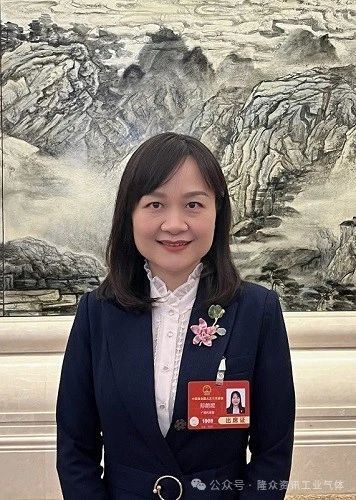
Deng Langni
National People’s Congress Deputy and Vice President of Guangxi University of Science and Technology
Helium is often referred to as the “gas chip” due to its wide-ranging and irreplaceable applications in quantum computing, aerospace, the defense industry, healthcare, and scientific analysis. With a high degree of external dependence, helium is a critical rare strategic resource that bears on national security and the development of high-tech industries, and it is increasingly becoming the focus of international competition for resources. Looking ahead, to mitigate the impact of market volatility and overcome the challenge of helium shortages, China must urgently strengthen its helium production and stockpiling capabilities, ensure the secure supply and demand of helium, and consolidate the foundation of a “major-country reserve.” This is not only an urgent task for safeguarding strategic energy security at present, but also an effective means of enhancing China’s international influence and voice in the global helium market.
To this end, it is recommended:
Optimize the strategic layout of helium resources and accelerate the move toward self-sufficiency in helium. Optimize the systemic layout for developing China’s helium resources and establish a strategic paradigm for the helium industry characterized by “government guidance and support, leadership and coordination by technology-leading enterprises, and participation by large, medium, and small businesses,” thereby integrating the helium industry into the national medium- to long-term development plan for strategic emerging industries. Focusing on key links in helium resource exploration, development, and storage, we will coordinate research resources across the helium value chain and provide robust support for breakthroughs in critical core helium technologies. We will strengthen the role of science and technology in driving innovation, cultivate technology-leading enterprises in the helium sector, and promote the intelligent and green transformation of the industry. In addition, we will enhance factor and service support, refine the policy framework, increase investment in production, and actively encourage domestic enterprises and research institutions to collaborate on joint R&D efforts. This will facilitate research into helium-source exploration, helium extraction and transportation, as well as enrichment and storage technologies, thereby advancing the large-scale development of the helium industry. Our ultimate goal is to achieve self-sufficiency in domestic helium supply and reduce reliance on foreign helium markets.
Accelerate the improvement of the helium reserve system to ensure a stable and reliable supply of helium. First, we will establish a comprehensive helium reserve system. This involves strengthening resource coordination and allocation, formulating supporting policies, and providing support to regions with the necessary conditions to accelerate the development of infrastructure for helium storage, transportation, and purification, thereby promoting efficient and safe helium reserves. At the same time, we will optimize the structure of helium imports to build a highly resilient helium industry chain and supply chain, ensuring the security and stability of helium supplies. On this basis, we will promote innovation and application of helium reserve technologies, encourage collaboration between enterprises and research institutions to develop high-efficiency, low-cost helium storage and transportation technologies, and enhance the technological sophistication and operational efficiency of the reserve system. In addition, we will strengthen international cooperation, diversify helium import channels, reduce dependence on single sources, and bolster the supply chain’s resilience to risks. Second, we will improve the development of helium storage standards. We will conduct a comprehensive assessment of the current state of helium storage, research and formulate relevant performance indicators, issue unified helium storage standards, and establish a robust standards framework to underpin the helium industry and drive its high-quality development. At the same time, we will establish a dynamic monitoring and evaluation mechanism for helium storage, conduct regular inspections and maintenance of reserve facilities, and ensure the quality and safety of reserved helium. We will also encourage enterprises to adopt intelligent and digital management tools to enhance the precision and sophistication of helium reserve management. By combining policy guidance with market mechanisms, we will advance the standardization and regularization of the helium reserve system, laying a solid foundation for the long-term, stable development of the helium industry.
Deepen reforms of market systems and mechanisms to invigorate the helium market. On the one hand, the state should expedite the promulgation of relevant policies and regulations to standardize the conduct of market entities, clarify rules for market access, operations, and supervision, and uphold a fair and competitive environment in the helium market. By formulating implementing rules and specific ordinances, we can combat market monopolies and unfair competition, thereby ensuring the healthy and orderly development of the helium market. On the other hand, we should deepen reforms of the market institutional framework and explore the establishment of diversified mechanisms for market entity participation. Through policy measures such as tax incentives, streamlined approval procedures, financial support, and enhanced entrepreneurship training, private enterprises should be encouraged to actively engage in investment and operations across the helium value chain, fully leveraging their advantages of resource flexibility and strong innovation capacity. At the same time, we should promote the development of a collaborative growth model characterized by “government guidance and support combined with market-oriented enterprise operations,” build an open, inclusive, and efficient helium industry ecosystem, comprehensively stimulate market vitality, and drive high-quality development of the helium industry. By integrating policy guidance with market-based reforms, we can gradually establish a well-regulated, transparent, and dynamic helium market system, thereby injecting strong momentum into the sustainable development of China’s helium industry.
Increase investment in R&D and accelerate the identification of new drivers for the development of the helium industry. At present, China’s helium industry is continuously breaking through technological bottlenecks and unlocking new drivers of growth. Guangxi Liugang Group places a strong emphasis on technological innovation and, in 2024, successfully produced ultra-pure helium with a purity of 99.9999%, thereby overcoming the limitations of conventional helium production technologies and providing crucial support for the domestic high-end helium market. Meanwhile, Gansu Qingyang Ruihaijia Energy Technology Co., Ltd., in collaboration with Lanzhou University, has established a joint laboratory and, through independently developed “ambient-temperature membrane separation technology for helium enrichment,” has achieved mass production of high-purity helium, addressing the shortcomings of traditional domestic helium extraction methods—namely their high energy consumption and substantial capital investment—and reaching an internationally leading level. These achievements not only advance the upgrading of China’s helium extraction technologies but also offer new technological pathways for the sustainable development of the helium industry. It is recommended that the state formulate relevant policies and introduce targeted measures to encourage more enterprises to increase their R&D investments, accelerate the exploration of helium application technologies and use cases, vigorously expand market demand, promote the adoption of helium in emerging sectors, and establish a complete industrial value chain spanning exploration, development, and end-use applications. Such efforts will enhance the industry’s value-added and foster its sustainable development.
Strengthen international exchanges and cooperation to enhance China’s influence and voice in the global helium market. Deepen international technological exchange and cooperation, promote joint development, tackle key technological challenges, and foster project collaboration, while exploring global helium resources. Supply Chain Collaboration models. For example, by collaborating with multinational corporations to introduce advanced technologies and equipment, we can enhance our capabilities in helium exploration, storage, and purification, thereby leveraging international technology transfer to drive domestic industrial upgrading. We will also refine mechanisms for international exchange and cooperation, align with global helium standards, and actively participate in the formulation of relevant rules. Furthermore, we will harness the leading role of flagship enterprises, encourage firms to seize opportunities presented by the ongoing restructuring of the global helium industry, proactively engage in the international division of labor, build a distinctive “Made in China” helium brand, lay the foundation for establishing global influence, and ultimately position China as a key pillar of the global helium industry value chain and supply chain, comprehensively elevating International Discourse Power 。
Reprinted from: People’s Forum Online
Relevant information

ONLINE MESSAGES
Please describe in detail the questions you need to consult, and we will arrange for a specialist to contact you in time
CONTACT US
Shandong Shaohua Gas Co., Ltd.
Phone: 40080 40085
E-mail: zhang0215@shaohuagas.com
Address: No. 5 Fengshan Road, Zhifu District, Yantai City, Shandong Province